
Saturday, 24 January 2026 | visual culture
Bring back Clippy! Backlash after Microsoft’s icons facelift
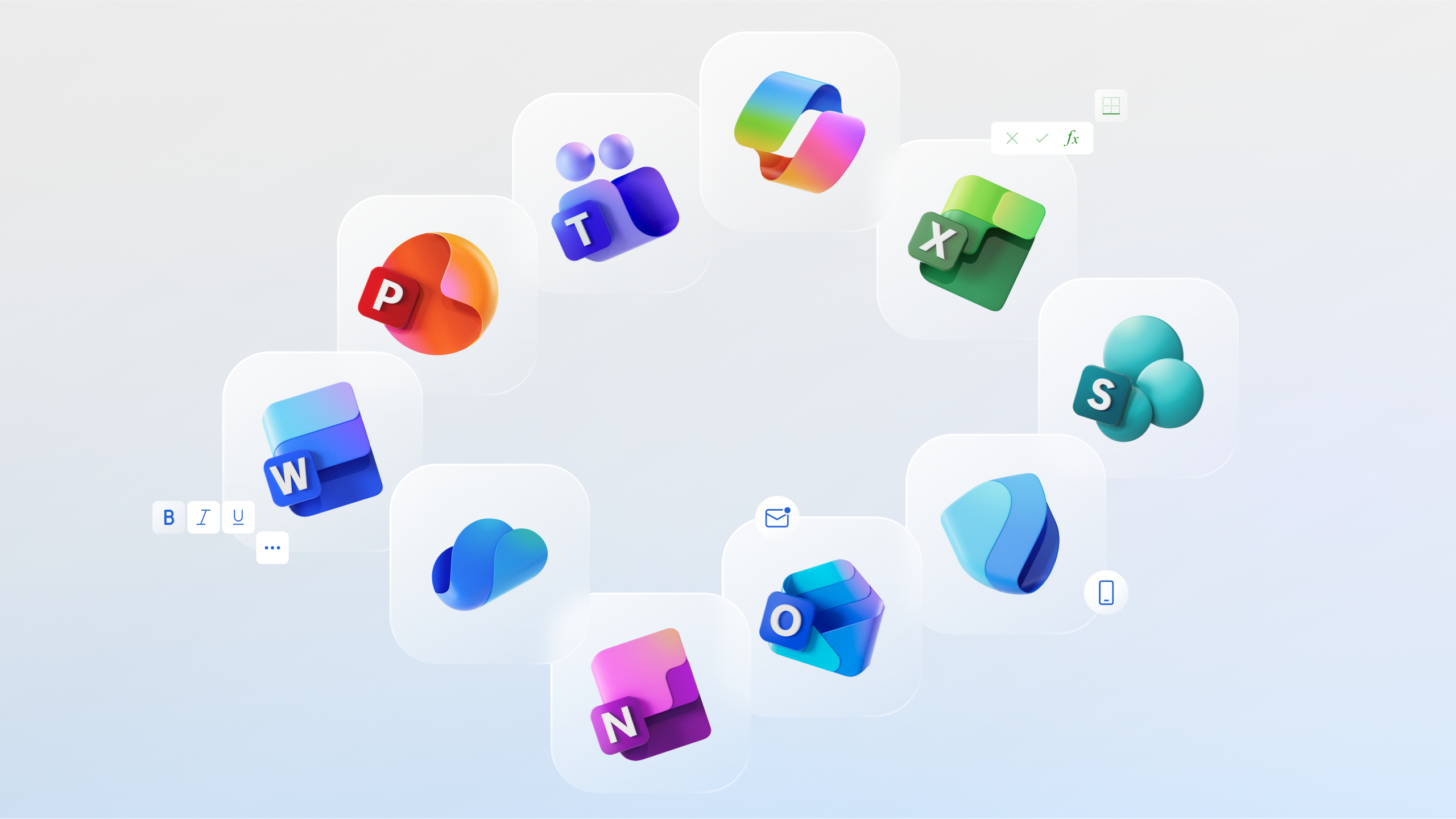
Pushback was expected when Microsoft unveiled its freshly updated icons recently — all corporate visual re-designs face similar scrutiny.
To be precise, the company transformed all 10 of its 365-suite icons.
I waited with my analysis, giving me time to scour the internet for people’s initial reactions and comments.
Why the change?
The most common objection was born out of pure frustration at Microsoft — also aimed at the corporate world in general — and its compulsion to continually update logos and visual assets.
Some called to bring back Clippy. Others claimed the design update was triggered by Apple’s recent iOS26 upgrade, in an attempt to bring Microsoft’s icons in alignment with the visual language of iPhone’s new liquid glass.
I’m not surprised by the pushback. We are nostalgic creatures and don’t like change. Change takes time to get used to — a point repeated in the negative comments about these updates.
On a one hand, there is a case for brands retaining the same look for as long as possible. One of the benefits is that it establishes a bond and a sense of stability and trust. It says to the customer, “you can count on me, I’ll be there for you no matter what”.
On the other hand — especially in the case of a tech company — an outdated logo (or icons) communicates lack of progress, of allowing itself to lag behind everyone else. It says, “I’m old, tired and not interested in exploring and pushing the boundaries of technology and science.”
It’s a tough balancing act for Microsoft. To its credit, this is the longest (7 years) it has ever waited to update the icons of its most popular services. The previous record was 5 years — between 2013 and 2018 — see Timeline image.
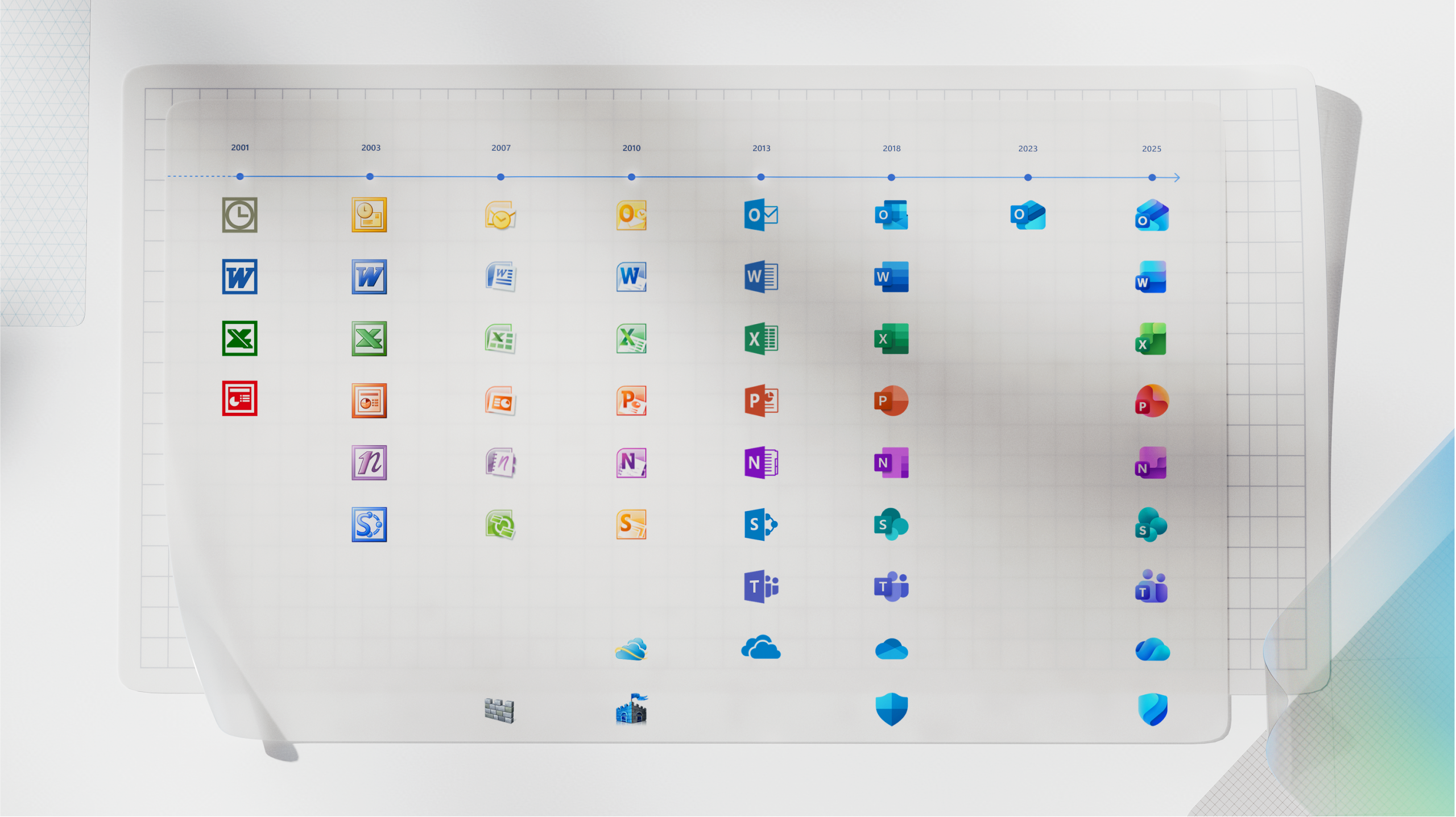
However, despite claims that this was an off-the-cuff sudden decision, the reality is that Microsoft is continually developing its visual language and evolving its vernacular in alignment with the company’s ideological and technological progress.
Maybe the backlash isn’t really about the updated design but about Microsoft’s misplaced priorities. There were many comments by Microsoft users who felt unheard, claiming the visual update was a varnish, unable to cover the lack of fixes users have been continually asking for, such as making the Azure admin centres faster or fixing formatting issues in Word.
A Reddit user’s sarcastic comment says, “To be fair to Microsoft. It is very hard to create icons which fully encompass the disconnected, bug-riddled mess that is the current office suite”.
Why AI?
At launch, CVP of Design and Research for Microsoft 365, Jon Friedman published an article. In it, he says:
“A reflection and a result of Copilot’s transformative impact, the new designs visually complete a cycle where art and truth continuously shape each other.”
This brings me to the second-most common discussion point: confusion about AI’s role in this visual facelift. Tying in with the broader discussion about Microsoft’s stance and its plans for the future, I mentioned earlier.
What is this truth he keeps referring to? And how does it fit in with the AI objective?
To understand the meaning of that statement requires the connection of dots between what Friedman says in the article and the refurbished designs.
The “truth” is the reflection of 365’s evolution in a 3-part progression:
1. Its historic aim to unify,
2. Current cohesive state empowered by AI, and
3. Future aspiration to solidify its bond with users.
The above is expressed through a metaphoric loop where the process feeds its visual expression, and vice versa.
3-part progression
All I’ll say about the first part — its historic aim to unify — is that it has been successfully accomplished, as evidenced by the earlier chart depicting its timeline, which shows the progressive harmonising of the icons’ design.
The second part — current cohesive state empowered by AI — is currently unfolding. And by AI, I mean Copilot, which is at the front, centre and top of this objective. If you pay attention to Microsoft’s images you’ll see it too.
Look at the image below . Notice that the Copilot icon is placed at the top, on the highest platform — this is repeated in other images from Microsoft, including the one at the start of this article.
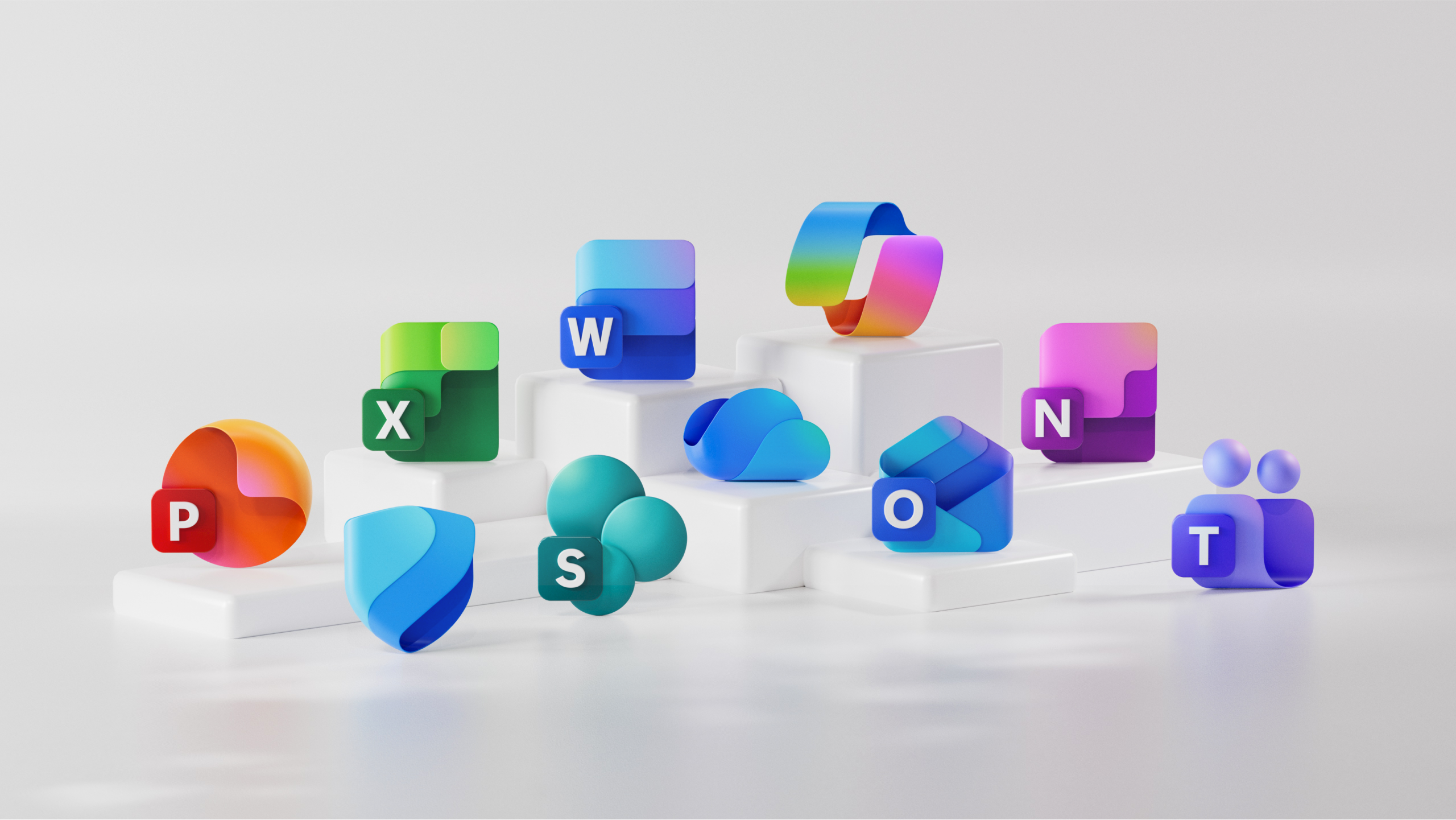
If you happen to download this image — directly from Microsoft — its file name reads Pedastle. A portmanteau of pedestal and castle, which can only be interpreted as a stronghold, with Copilot claiming the dominating spot in this hierarchy.
Copilot embodies the colours of the entire suite, permeating each app and leading the charge in 365’s present and future. Its presence is hard to ignore, as every Word user knows. But it isn’t always welcome.
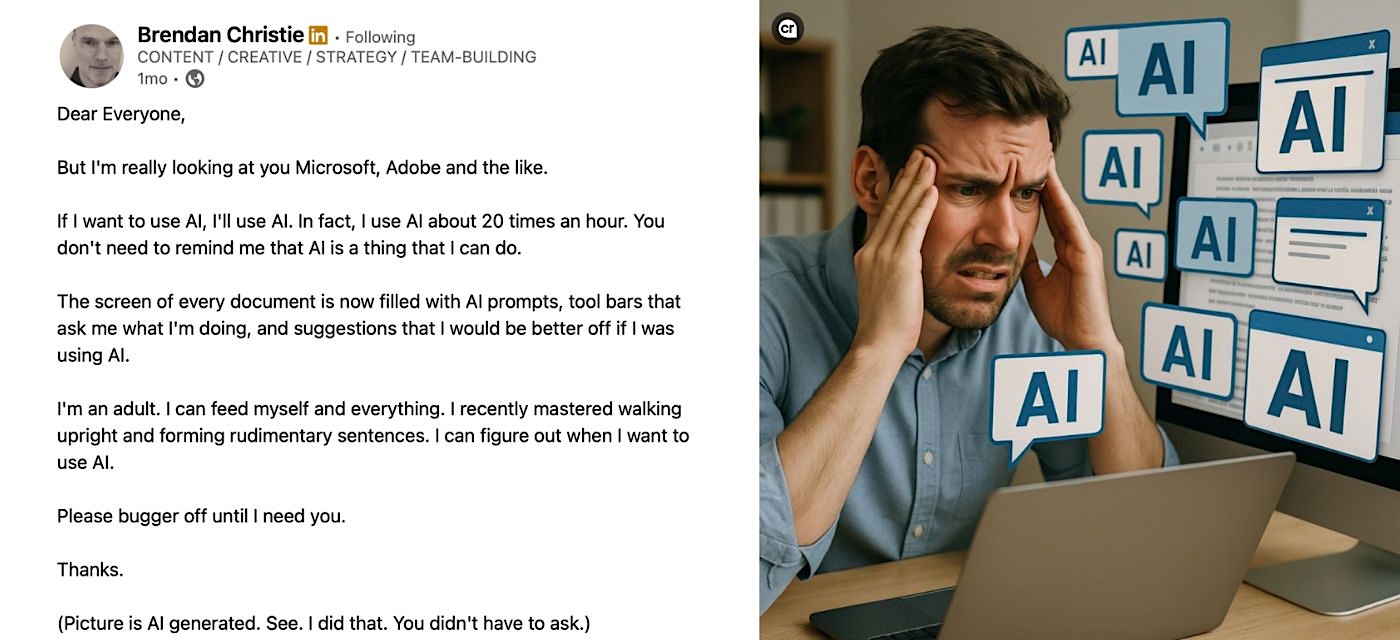
For many, myself included, the AI-led direction — read, intrusion — is a point of frustration. Media veteran Brendan Christie couldn’t have said it better, in his recent post:
I called the suite a stronghold, Microsoft prefers “connected ecosystem”. It makes no difference, each term implies it will fight hold its ground and to protect itself.
The ecosystem is presented as a unified and harmonious dance where all apps speak the same language, communicating with each other seamlessly. One of many, not individual parts. Each with its own purpose, but always part of a whole system.
This symbiotic flow references nature, which brings me to the third part in this progression: the aspiration to solidify Microsoft 365’s bond with its users.
To accomplish this, Microsoft is harnessing the power of visual language through the updated designs.
Let’s start with what the visuals signify.
As I just mentioned, the images depict a unified dance evoking nature’s ecosystem. Each app graciously cooperating with and supporting another. Once you know one, you’ll intuitively know how to use another, which already feels familiar, ushered by the Copilot, which will hold your hand through the transitions and remove any remaining feelings of resistance.
But that’s just the overall impression. To strengthen this emotional connection, Microsoft design team focused on every detail of its updated design.
Let’s take a look at its other visual elements.
Its previous icons were flat, unemotional and formal. The surface of the new designs is pearly, speaking to preciousness — but also candy-like, fun and sweet.
The design team also added depth. Its 3D curvy appearance links vision to the sense of touch and transforms the icons into tactile objects. They were dead, now they’re alive. They can be interacted with and played with.
The icons’ animated appearance makes you want to reach out tickle one, expecting it to wobble with delight and laughter, like some joyous jello-baby. There is a reason these icons look so cute. Small children are cute, and we have an inbuilt impulse to look at them, care for them, and not to abandon them.
This isn’t just my critic’s impulse to philosophise, Friedman confirms it in that same article, they decided to use smooth folds and curves to give “the icons a sense of playful motion and approachability.”
But not everyone is convinced by the look. Another Reddit user says, “I personally dislike attention-grabbing, child-like icons, as I prefer my interfaces to be minimalist, clean, focused and professional.”
Others welcome the new look, saying, “I’ve enjoyed the flat sleek design for a bit now and was a fan when it became popular, but I have an itch for icons to be a bit more fun.”
I’m not judging. It’s only logical for Microsoft to take this approach. It is a business that needs to find innovative ways to not only make profits now but into the future. To achieve its aim, it needs users to make an emotional connection with its products. Apple has successfully done this for the longest time. I should know, I am its willing victim.
For now, Microsoft is selling utopia, although it’s still unclear whether they will be able to deliver it by turning this new-and-improved look into reality.
Related Articles
The Great Speeding Up
“Nostalgic silhouettes” are the exact words posted 20 hours ago by a young reporter attending the New York Fashion Week’s Coach F/W 2026 collection.
Of course, this is just one of gazillion examples in a global reaction to the last 12 or so months.
The Georg Jensen Kettle That Broke My Heart
I was excited to discover Georg Jensen was launching its first electric kettle and toaster in 2024. I was in the market for a new kettle and could hardly wait for it to arrive at a deluxe retail pedestal near me.
The mirror polished stainless steel and matte black options joined the exclusive Bernadotte collection
Book Review: Grit by Angela Duckworth
This book is an eye-opener for those still searching for what they want to do in life. But also for those struggling with imposter syndrome or follow-through.
Duckworth’s advice is priceless, especially for someone who has dipped their toes into many career paths and has trouble picking a single métier.